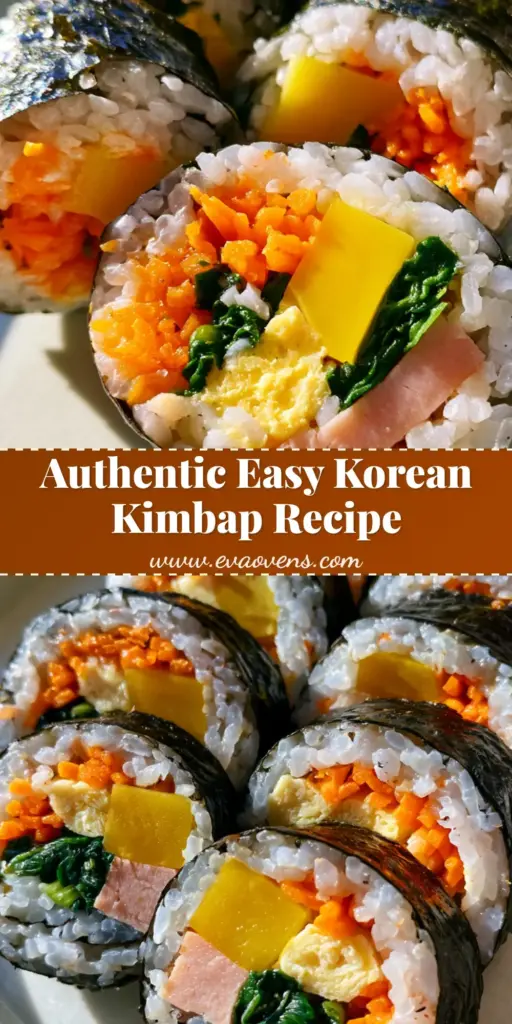
Mastering the Korean Kimbap Recipe is like learning to paint with edible colors. These iconic seaweed rice rolls are a staple of Korean picnics, lunchboxes, and street food culture for a reason. With a shiny outer layer of roasted seaweed and a heart packed with vibrant, seasoned vegetables and savory ham, every bite offers a satisfying crunch and a hit of nutty sesame oil. Whether you are prepping for a busy week or hosting a themed dinner, this guide ensures your rolls look just as professional as the ones in a Seoul boutique.
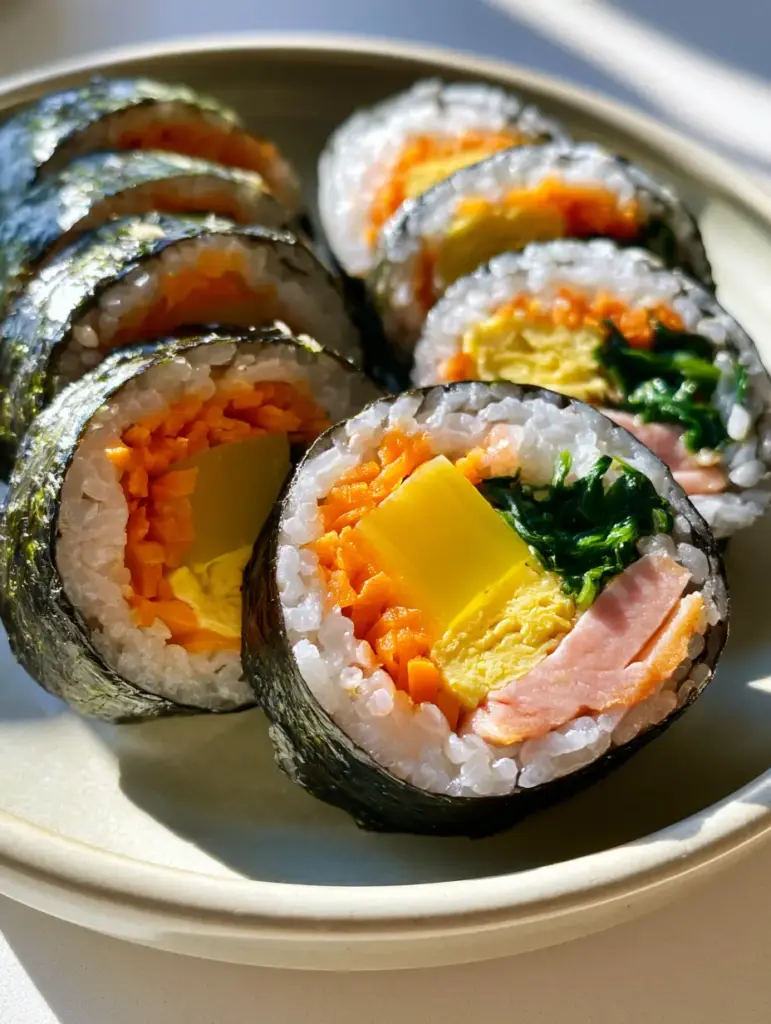
Why This Vibrant Korean Kimbap Recipe Works
- Textural Harmony: We balance the crunch of pickled radish with the softness of a fluffy egg omelet and tender blanched spinach.
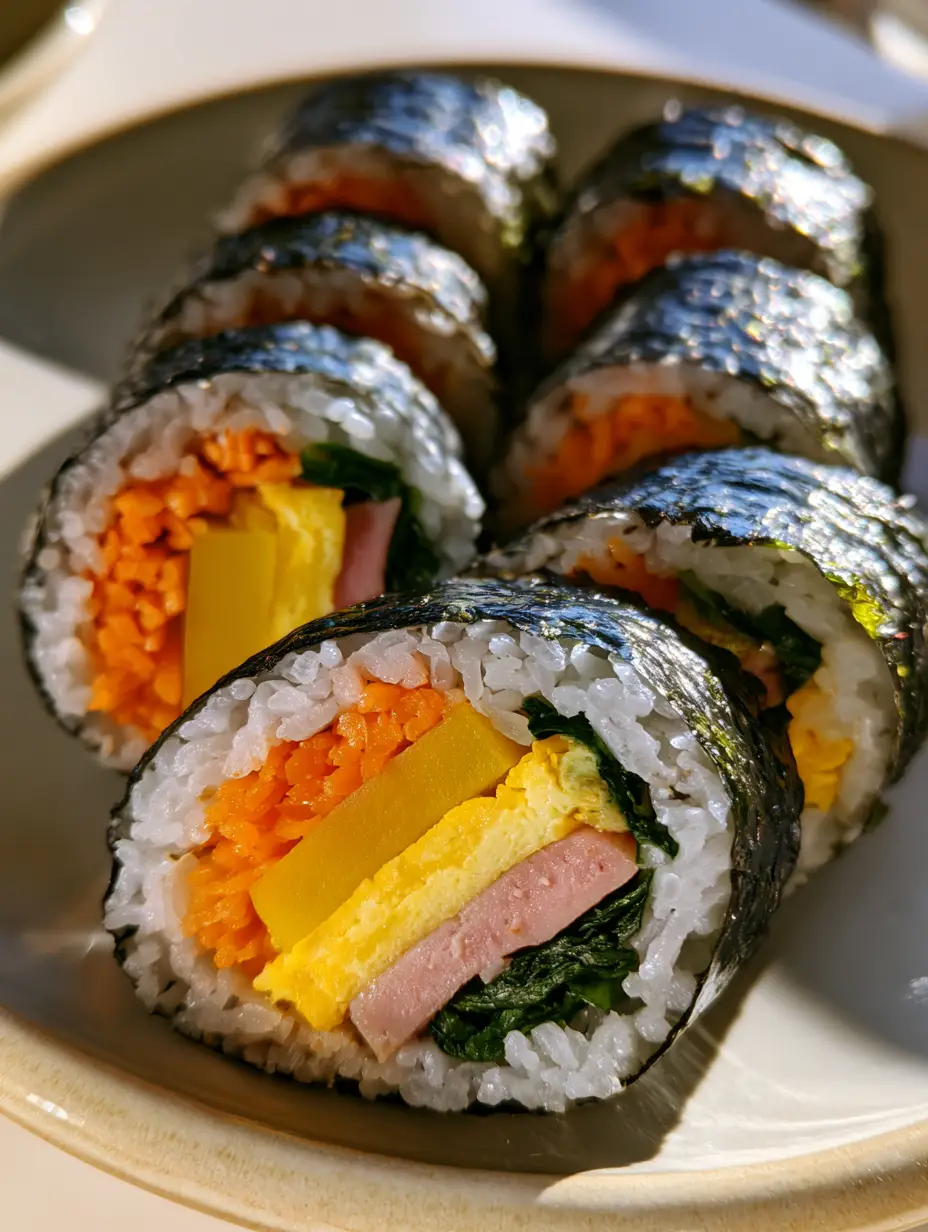
- Visual Appeal: The high-contrast colors of orange carrots, bright green spinach, and yellow radish create a stunning “rainbow” effect when sliced.
- Scientifically Seasoned Rice: We use short-grain rice seasoned specifically with toasted sesame oil and salt to provide the perfect structural base that isn’t overly sticky or bland.
- Pro-Level Slicing: Our technique ensures clean cuts with no rice smearing, mimicking the handheld smartphone photo aesthetic of elite food bloggers.
The Essential Components for Authentic Kimbap
To achieve the results seen in our Korean Kimbap Recipe, you cannot cut corners on the quality of your ingredients. Each component serves a specific culinary purpose to balance fat, acid, and salt.
Roasted Seaweed Sheets (Gim): You need high-quality, thick roasted seaweed. These provide the dark, shiny exterior that holds the roll together without tearing.
Short-Grain White Rice: Unlike long-grain varieties, short-grain rice has the amylopectin levels required for the “stickiness” that keeps your roll intact. If you enjoy hearty meals, you might also like our beefy king ranch casserole for another comforting dinner option.
Yellow Pickled Radish (Danmuji): This is non-negotiable. Its thick yellow rectangular strip provides the essential acidic “snap” that cuts through the richness of the sesame oil.
Julienned Sauteed Carrots: Finely julienning the carrots increases their surface area, allowing them to soften slightly while retaining a vibrant orange hue and a hint of sweetness.
Blanched Spinach: Quickly cooked and shocked in cold water, this provides the bright green earthy notes essential to the flavor profile.
Egg Omelet Strips: A thin, rolled omelet is sliced into strips to add a yellow, fluffy protein layer that cushions the other ingredients.
Cooked Ham Strips: We use pale pink cooked luncheon meat or ham, sliced into long batons, to provide a savory, salty anchor to the roll. For more savory inspiration, check out our classic patty melt.
Toasted Sesame Oil: Used both in the rice and as a final coating on the seaweed to provide that signature aroma and glossy finish.
How to Prep Your Kimbap Ingredients Like a Pro
1. The Foundation: Seasoned Rice
Start with 3 cups (approx. 600g) of cooked short-grain white rice. While it is still warm, fold in 1 tablespoon (15ml) of toasted sesame oil and 1/2 teaspoon (3g) of fine sea salt.
Use a gentle folding motion with a rice paddle to avoid smashing the grains. The rice should be glossy and fragrant, not mushy. Set it aside to cool to room temperature; rolling with hot rice will wilt the seaweed prematurely.
2. The “Rainbow” Fillings
Prepare the finely julienned sauteed carrots by tossing them in a hot pan with a drop of oil for 1-2 minutes until just tender. They should remain vibrant orange and slightly crisp.
For the spinach, blanch it in boiling water for 30 seconds, then immediately plunge it into an ice bath. Squeeze out all excess moisture—this is critical to prevent a soggy roll. Season with a touch of sesame oil and salt.
Create the yellow strip of fluffy rolled egg omelet by whisking 3 eggs with a pinch of salt, frying into a thin sheet, and cutting into long, even strips. If you love egg-based dishes, you’ll definitely want to see our jalapeno popper egg rolls.
How to Roll the Perfect Korean Kimbap Step-by-Step
Place one sheet of roasted seaweed on a bamboo rolling mat, shiny side down. The long side should be facing you.
Spread about 3/4 cup (150g) of the seasoned rice evenly over the bottom 2/3 of the seaweed. Keep your hands slightly damp to prevent sticking, but ensure the layer is thin and consistent.
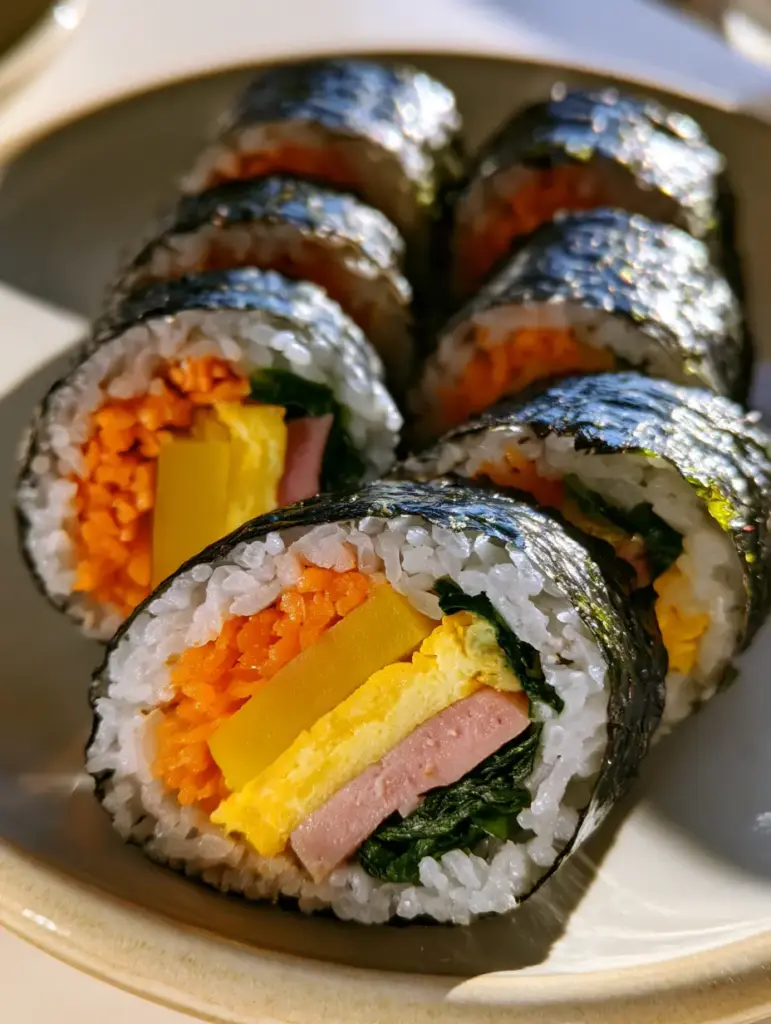
Layer your fillings horizontally across the center of the rice: the thick yellow pickled radish, the pale pink ham strips, a generous pile of orange carrots, the bright green spinach, and the yellow egg omelet.
Using the bamboo mat, lift the bottom of the seaweed and fold it over the fillings. Tuck the edge tightly and continue to roll with firm, even pressure. This ensures the center is packed with distinct layers as shown in the visual blueprint.
Brush the outside of the roll with a thin coating of toasted sesame oil. This adds flavor and gives the kimbap its iconic dark, shiny appearance.
Use a very sharp knife to cut the roll into 1/2-inch (1.25cm) slices. Wipe the blade with a damp cloth between each cut to ensure clean slices with no rice smearing.
Expert Tips for Kimbap Success
- Squeeze the Spinach: Any residual water in the spinach will travel into the rice and make the seaweed chewy. Squeeze until no more drops fall.
- Don’t Overstuff: It is tempting to add more ham or egg, but overstuffing leads to the seaweed bursting during the rolling process.
- The Damp Knife Trick: Keep a wet paper towel nearby. A clean, damp blade is the secret to those high-angle, close-up shots of perfect slices.
- Rice Temperature: Always let your rice cool slightly. If it’s steaming hot, the dark roasted seaweed will shrink and shrivel.
- Uniformity: Try to cut all your vegetable strips to the same length as the seaweed sheet for a clean look at the ends.
Storage, Reheating & Freezing
Kimbap is best enjoyed the day it is made. However, you can store leftovers in an airtight container in the refrigerator for up to 24 hours. Note that the rice will harden when cold.
Reheating Tip: To revive day-old kimbap, dip the slices in whisked egg and pan-fry them for 1-2 minutes per side. This creates a delicious “Kimbap Jeon” that is a favorite Korean snack!
We do not recommend freezing kimbap, as the pickled radish and sauteed carrots will lose their texture and the rice will become unpleasantly dry.
What to Serve With This Korean Kimbap Recipe
Kimbap is a complete meal on its own, but it pairs beautifully with a spicy bowl of Tteokbokki (Korean rice cakes) or a simple clear radish soup. For a fusion twist, try serving it alongside some slow cooker teriyaki meatballs for a protein-packed lunch spread.
If you’re looking for a dessert to follow this savory treat, our buffalo chicken lasagna might be too heavy, but an Italian lemon custard cake would provide a perfect zesty finish!
Frequently Asked Questions
Yes, you can make it a few hours in advance. Keep it at room temperature in a cool spot. If refrigerated, the rice will harden, but you can revive it by pan-frying slices in egg wash.
Use a very sharp knife and wipe it with a damp cloth or a bit of sesame oil between every few cuts. This prevents the rice starch from sticking and smearing the fillings.
While danmuji is traditional, you can substitute with pickled cucumber or even a mild sauerkraut in a pinch, though the iconic yellow color and specific crunch will be missing.
While they look similar, Kimbap rice is seasoned with toasted sesame oil and salt, whereas Sushi rice uses vinegar and sugar. Kimbap also typically features cooked or pickled fillings rather than raw fish.
Tearing usually happens if the seaweed is too thin or if the rice is too hot. Ensure you use ‘Gim’ specific for kimbap and let your rice cool to room temperature before spreading it.
The Final Masterpiece: Korean Kimbap Recipe Card
Korean Kimbap Recipe: The Ultimate Guide to Perfectly Sliced Rolls
Ingredients
Equipment
Method
- Place warm cooked rice in a bowl. Add 1 tbsp sesame oil and salt. Fold gently until glossy.
- Saute carrots until tender-crisp. Blanch spinach and squeeze out all water. Fry eggs into a flat omelet and slice into strips.
- Place seaweed on bamboo mat. Spread rice over 2/3 of the sheet. Arrange radish, ham, carrots, spinach, and egg in the center.
- Roll tightly using the mat. Brush the exterior with sesame oil. Slice into 1/2-inch rounds with a damp, sharp knife.
Notes
Wipe your knife with a damp cloth between every single cut for professional results.
Save This Recipe to Pinterest!
If you loved this Korean Kimbap Recipe, please save it to your favorite Pinterest board so you can find it later! Following @eva_ovens helps us bring you more elite-level recipes every week.
Did you make these rolls? Upload a photo in the comments below—we love seeing your clean slices and vibrant colors! Don’t forget to leave a 5-star rating if this guide helped you master the art of the kimbap roll.