This Baked Dijon Salmon is the ultimate weeknight luxury, featuring a succulent fillet draped in a velvety garlic-infused mustard glaze. If you have been searching for a restaurant-quality meal that takes less than 30 minutes, this cast-iron masterpiece is your answer. The combination of pungent Dijon, aromatic minced garlic, and the bright pop of fresh parsley creates a flavor profile that is both sophisticated and incredibly comforting.
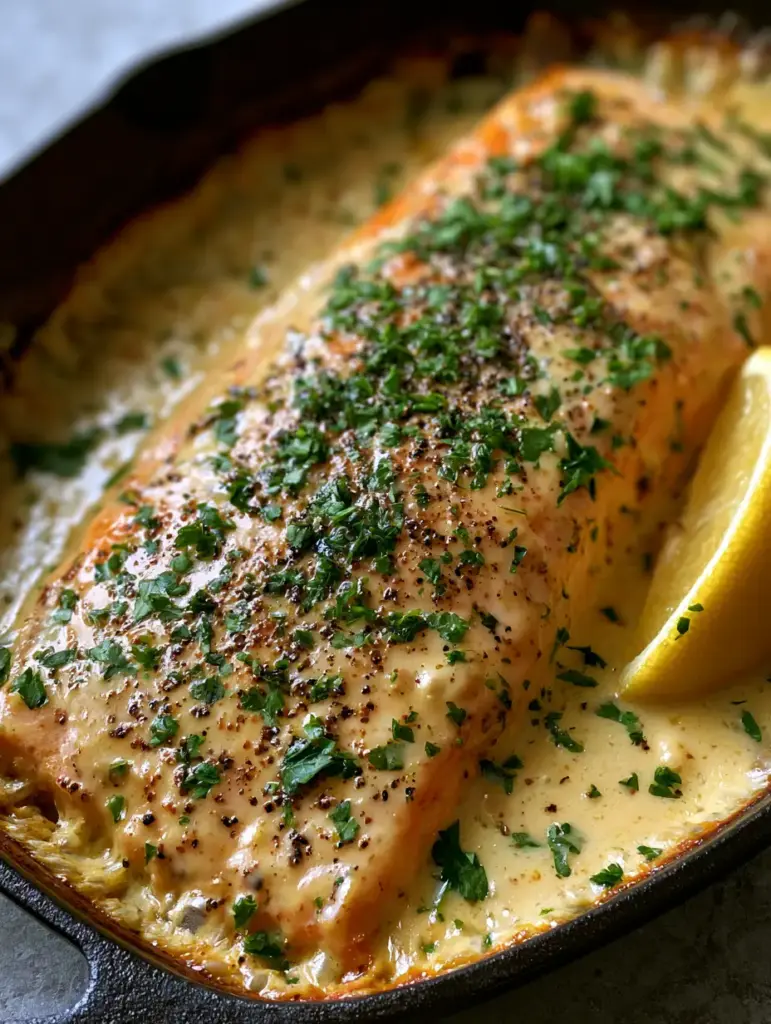
When you pull this Baked Dijon Salmon out of the oven, the edges of the thick sauce are bubbly and golden, perfectly contrasting the tender, flaky pink fish beneath. It is a visual and culinary triumph that performs exceptionally well for those hosting dinner parties or simply looking to elevate their meal prep game. Pairing this with a vibrant street corn chicken rice bowl or a light side salad makes for a complete, balanced feast.
Why This Is The Best Baked Dijon Salmon You Will Ever Make
- The Velvety Texture: The thick Dijon coating creates a moisture barrier, ensuring the salmon never dries out in the oven’s high heat.
- Cast Iron Excellence: Using a dark cast iron skillet allows for superior heat distribution, giving the bottom of the fillet a perfect sear while the top remains tender.
- Visual Appeal: With vibrant green parsley and coarse ground black pepper against the pale-yellow glaze, this dish is a Pinterest-ready showstopper.
- Sophisticated Simplicity: It uses pantry staples like garlic and mustard to achieve a complex, gourmet taste profile.
The Anatomy of Flavor: Essential Ingredients
To achieve the specific Baked Dijon Salmon look and taste from our blueprint, each ingredient serves a scientific and culinary purpose.
1. Large Salmon Fillet (approx. 2 lbs / 900g): Choose a thick center-cut fillet for even cooking. The thickness is key for maintaining that juicy interior.
2. Dijon Mustard (1/2 cup / 120ml): This provides the “velvety pale-yellow” base. Its acidity cuts through the fatty richness of the salmon.
3. Fresh Minced Garlic (4 cloves): Garlic adds a sharp, savory depth that mellows beautifully as it bakes into the mustard glaze.
4. Fresh Parsley (1/4 cup / 60ml, finely chopped): Used as a heavy garnish, it provides a necessary herbaceous lift and a striking color contrast.
5. Coarse Ground Black Pepper (1 teaspoon / 5ml): The “coarse” part is vital; it provides texture and a slow-building heat that complements the mustard.
6. Extra Virgin Olive Oil (1 tablespoon / 15ml): Used to coat the cast iron skillet, ensuring the fish doesn’t stick and the skin (if present) gets crisp.
7. Fresh Lemon Wedges: Essential for serving; the citric acid brightens the heavy garlic and mustard notes right before the first bite.
Step-by-Step Instructions for the Perfect Bake
Preparing the Cast Iron Skillet
Start by preheating your oven to 400°F (200°C). Place your dark cast iron skillet inside the oven while it preheats. This “hot start” method ensures the salmon begins cooking the moment it touches the pan.
Once the oven is ready, carefully remove the skillet using a heavy-duty oven mitt. Drizzle the 1 tablespoon (15ml) of olive oil into the pan, swirling to coat the bottom evenly. You should see a faint shimmer on the oil.
Whisking the Velvety Dijon Glaze
In a small mixing bowl, combine the 1/2 cup (120ml) of Dijon mustard with the 4 cloves of minced garlic. Use a whisk to blend them until the sauce is completely smooth and pale yellow. If you love bold flavors, you might enjoy comparing this savory profile to the richness of chicken romano.
Coating the Salmon
Pat your salmon fillet completely dry with paper towels. This is a non-negotiable step; moisture is the enemy of a good glaze adhesion. Place the salmon in the hot skillet (skin side down). Carefully spoon the Dijon mixture over the top, using the back of the spoon to create a thick, even layer that covers every inch of the fish.
Baking to Golden Perfection
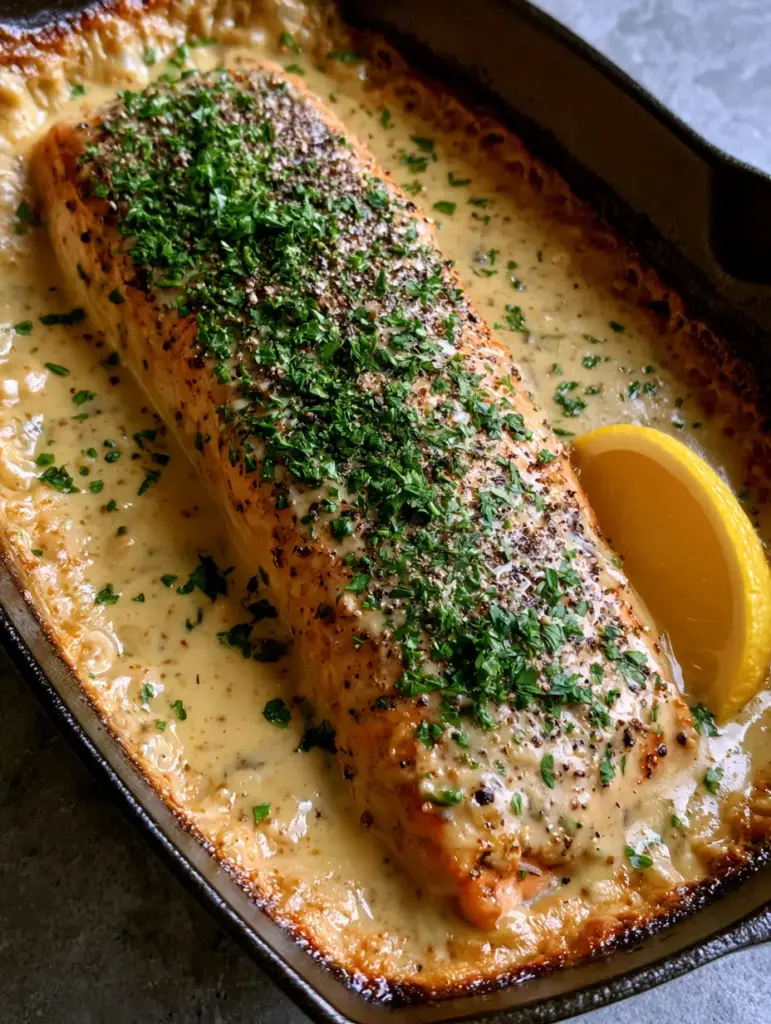
Slide the skillet back into the oven. Bake for 12-15 minutes, depending on the thickness of your fish. You are looking for the “Visual & Sensory Cues”: the edges of the mustard sauce should be slightly bubbly and turning a light golden brown.
The salmon is done when it reaches an internal temperature of 145°F (63°C) and flakes easily with a fork. Do not overcook, or you will lose the velvety texture we worked so hard to build.
The Final Garnish and Presentation
Remove the Baked Dijon Salmon from the oven. While it is still sizzling, immediately cover the surface with a heavy dusting of finely chopped parsley and the coarse ground black pepper. The residual heat will wake up the oils in the pepper and the aroma of the parsley.
Nestle a fresh yellow lemon wedge against the side of the fish inside the skillet. The contrast of the yellow lemon, green herbs, and gray stone background makes for a stunning presentation.
Expert Tips for Success
- Room Temperature Salmon: Take your fish out of the fridge 15 minutes before cooking. This ensures the center cooks at the same rate as the exterior.
- The “Dry” Rule: I cannot stress enough how important it is to dry the salmon. A wet fish will cause the Dijon glaze to slide off into the bottom of the pan.
- Garlic Size: Minced garlic should be fine, not chunky. This allows it to integrate into the sauce for a smooth, velvety finish.
- Skillet Choice: If you don’t have cast iron, use a heavy stainless steel pan. Avoid thin baking sheets as they don’t hold the heat necessary for bubbly edges.
Storage, Reheating & Freezing
If you have leftovers of this Baked Dijon Salmon, store them in an airtight container in the refrigerator for up to 3 days. To reheat, avoid the microwave as it rubberizes the fish. Instead, place the salmon back in a skillet with a splash of water, cover, and heat on low until warmed through.
We do not recommend freezing this specific recipe, as the Dijon mustard glaze can separate and lose its velvety texture upon thawing.
What to Serve With This Dish
This salmon is incredibly versatile. For a hearty meal, serve it alongside roasted fingerling potatoes or a wild rice pilaf. If you are looking for a sweet finish to your dinner, these banana bread brownies are a fantastic follow-up.
For a lighter option, steamed asparagus or a crisp cucumber salad provides a refreshing crunch that balances the creamy Dijon coating.
Frequently Asked Questions
While this specific version focuses on a savory garlic-Dijon profile, you can add 1 tablespoon of honey for a sweeter variation. Note that honey will cause the glaze to caramelize and brown faster.
The salmon is done when it reaches an internal temperature of 145°F (63°C) and the meat flakes easily with a fork. Visually, the glaze should be bubbly and the fish opaque.
Yes, leaving the skin on helps protect the delicate fish from the high heat of the cast iron skillet, keeping it moist. You can easily remove it after cooking if preferred.
A smooth, creamy Dijon mustard is best for achieving the velvety texture shown in the photos. Avoid whole-grain mustard if you want the pale-yellow, velvety appearance.
The Ultimate Baked Dijon Salmon Recipe Card
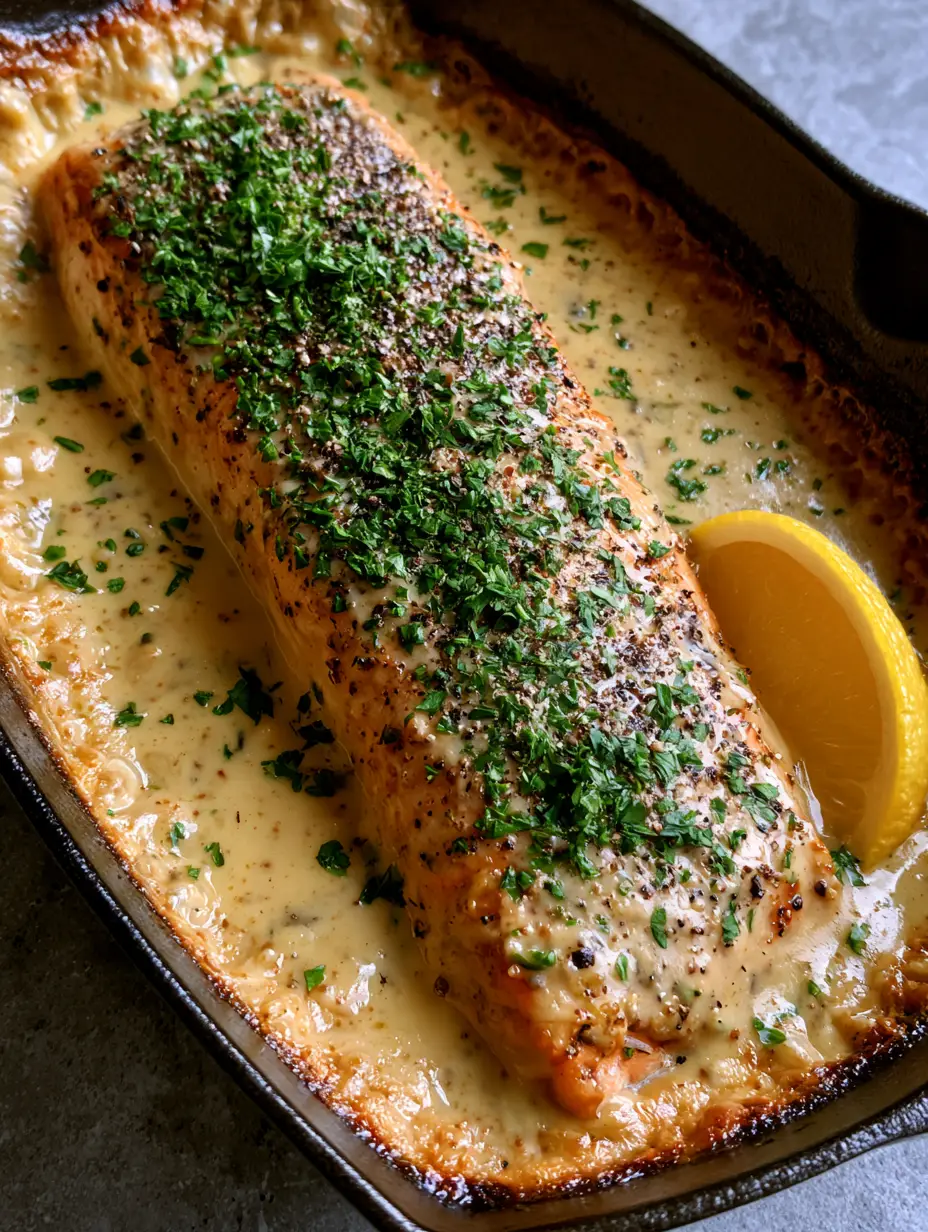
Baked Dijon Salmon with Garlic and Fresh Parsley
Ingredients
Equipment
Method
- Preheat oven to 400°F (200°C) with the cast iron skillet inside.
- Whisk together Dijon mustard and minced garlic until a smooth, pale-yellow velvety sauce forms.
- Pat salmon dry, place in the hot oiled skillet, and coat thickly with the mustard mixture.
- Bake for 12-15 minutes until the sauce edges are bubbly and golden and the fish flakes easily.
- Top with fresh parsley, coarse pepper, and a lemon wedge before serving.
Notes
Always pat the fish extremely dry to ensure the glaze sticks perfectly.
Join the Community!
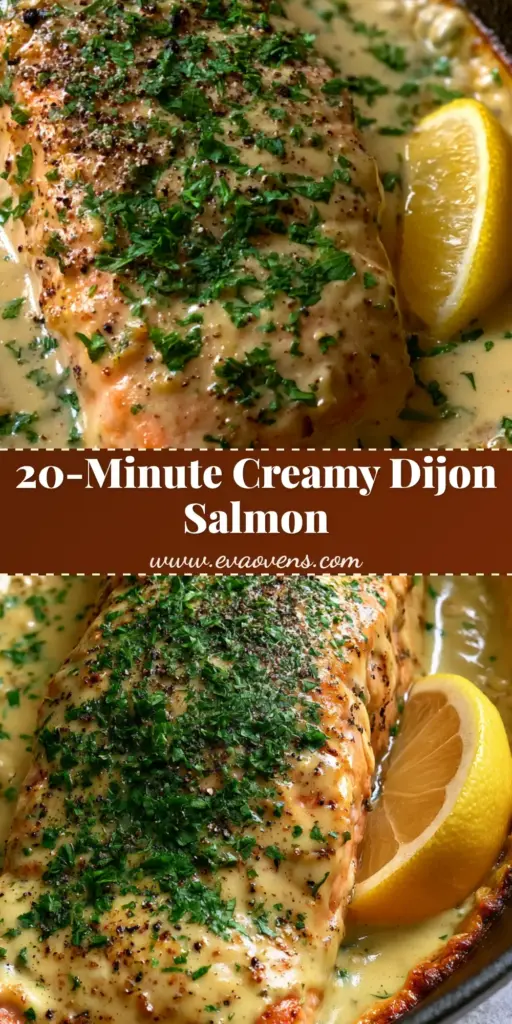
If you loved this Baked Dijon Salmon, please save this recipe to your Pinterest boards so you can find it later! Following @eva_ovens helps us keep the kitchen fires burning and new recipes coming your way.
Did you make this? We want to see! Upload a photo of your salmon in the comments below and let us know how it turned out. Don’t forget to leave a 5-star rating if this became an instant favorite in your household!